In today’s rapidly evolving world of eco-friendly alternatives, paper cups have become an indispensable part of our daily lives. As businesses and consumers alike move toward more sustainable packaging solutions, the demand for paper cups continues to surge. But what goes on behind the scenes to ensure these everyday items are produced quickly and efficiently? The answer lies in the intricate machinery designed to manufacture paper cups. Whether you are an entrepreneur looking to step into the profitable world of paper cup manufacturing, or an established business owner seeking to enhance your production efficiency, understanding the technology, costs, and intricacies involved is essential. This comprehensive article takes you through the seamless production process of paper cups, uncovering the factors that contribute to the profitability of paper cup manufacturing machines. From initial setup investments to production capacities, maintenance requirements, and project profitability, we will explore every detail. Let’s dive in and unlock the secrets that power these essential machines.
The Evolution of Paper Cup Making Machines
Paper cup making machines have evolved dramatically over the years. What began as a simple process of folding and sealing paper has transformed into an automated and highly efficient operation. Modern machines boast cutting-edge technology, offering enhanced speed, precision, and flexibility in production.
There are different types of paper cup making machines available in the market, each catering to varying business needs. These machines can produce cups of different sizes and thicknesses, making them suitable for everything from hot beverages to cold drinks and specialized packaging. Let iGreen Guide you to break down the major categories:
-
Fully mechanical Machine: These are typically lower in cost and are ideal for small-scale production. While the operator handles some manual tasks, these machines still offer an efficient way to produce a moderate volume of paper cups.
-
Semi-servo Machine: Perfect for large-scale production, these machines require minimal human intervention and are capable of producing a high volume of paper cups with consistent quality. The automation not only saves time but also reduces the risk of human error.
-
Full Servo Machines: For manufacturers looking to scale up quickly, high-speed paper cup making machines offer unparalleled efficiency. With the ability to produce thousands of cups per hour, these machines are essential for large production facilities aiming to meet high demand.
Key Factors That Drive Profitability
Several factors play a significant role in determining the efficiency and profitability of a paper cup manufacturing project. Understanding these elements can help you optimize your production and maximize returns on investment.
1. Initial Investment Costs
The cost of purchasing a paper cup making machine is a major factor to consider when planning your venture. Prices can range from $8,000 to $35,000, depending on the machine’s speed, level of automation, and production capacity.
2. Maintenance Costs
Like any machinery, paper cup making machines require regular maintenance to ensure optimal performance. Preventive maintenance and timely repairs can minimize downtime and prolong the lifespan of your equipment.
Routine maintenance costs generally range from $1,000 to $5,000 annually, depending on the type of machine and the intensity of use. Regular maintenance schedules not only help prevent breakdowns but also maintain the quality of the cups produced, ensuring consistent product output.
3. Auxilary Machine Costs
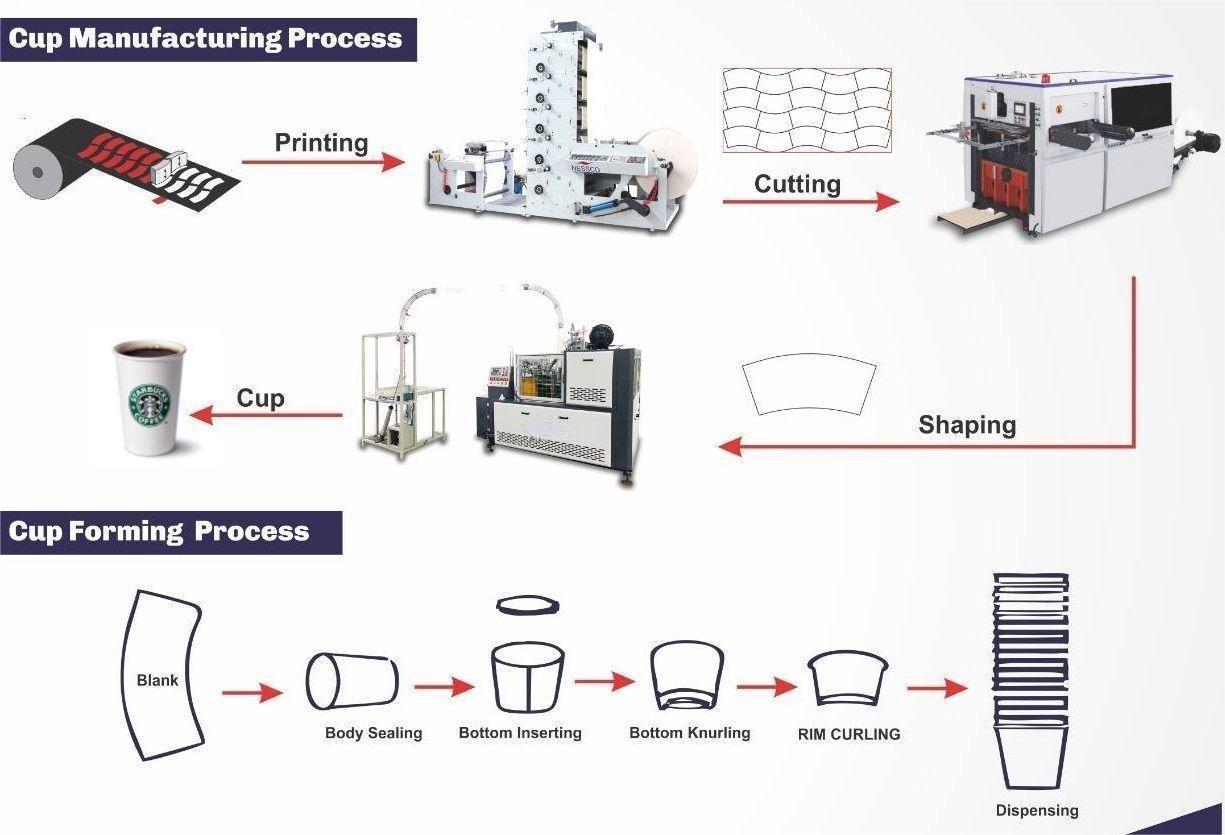
If you are looking for large scale production, some auxiliary machines are in need, like Die-cutting machine, Printing machine, and Auto-collector and packing machine.
4. Production Capacity
Production capacity is another key factor in determining profitability. High-speed automatic machines can produce up to 80,000 -100,000 cups per day per machine, depending on the cup size and thickness. On the other hand, semi-servo machines produce fewer cups, making them more suitable for businesses with moderate production needs.
The output capacity directly correlates with revenue potential. The higher the capacity, the more cups you can produce and sell, ultimately driving higher profits. For businesses with access to large markets, such as cafes, restaurants, or catering services, high production volumes are essential to maintaining a competitive edge.
5. Energy Efficiency
Energy consumption is another important consideration. Paper cup making machines, especially the fully automated and high-speed variants, require a significant amount of power to operate. However, modern machines are designed with energy efficiency in mind, reducing overall electricity costs.
By selecting energy-efficient machines, manufacturers can minimize operating costs, further enhancing profitability. Look for machines with optimized power consumption features to keep electricity bills in check, even with high production volumes.
Additional Considerations for Starting a Paper Cup Manufacturing Project
Beyond the cost of machinery and operational expenses, there are a few other important considerations to keep in mind when starting a paper cup manufacturing project:
1. Raw Material Costs
The quality of the raw materials used, such as paperboard or biodegradable alternatives, will influence both production quality and costs. Sourcing reliable, eco-friendly materials is crucial for businesses that aim to meet environmental standards and consumer demands for sustainable products.
2. Compliance with Environmental Regulations
As consumers and governments push for more sustainable packaging solutions, it’s important for manufacturers to comply with environmental regulations. Ensuring your machines and production processes meet eco-friendly standards will not only make your business more marketable but also help avoid costly fines and legal issues.
3. Market Demand
Before investing in paper cup making machines, it’s essential to research the market demand in your region or target market. Establishing relationships with local businesses such as cafes, restaurants, and food chains can secure your position in the supply chain and ensure consistent demand for your products.
Paper cup making machines play a pivotal role in the production of sustainable packaging products, catering to a rapidly growing market. Whether you’re just entering the industry or seeking to upgrade your current production line, understanding the costs, machine types, and key factors influencing profitability is essential for success.
With the right machinery, raw materials, and operational strategy, you can capitalize on the booming demand for eco-friendly paper cups, driving both sustainability and profitability. By investing in the appropriate equipment and maintaining a keen eye on market trends, your paper cup manufacturing venture can become a cornerstone of success in the sustainable packaging industry.


