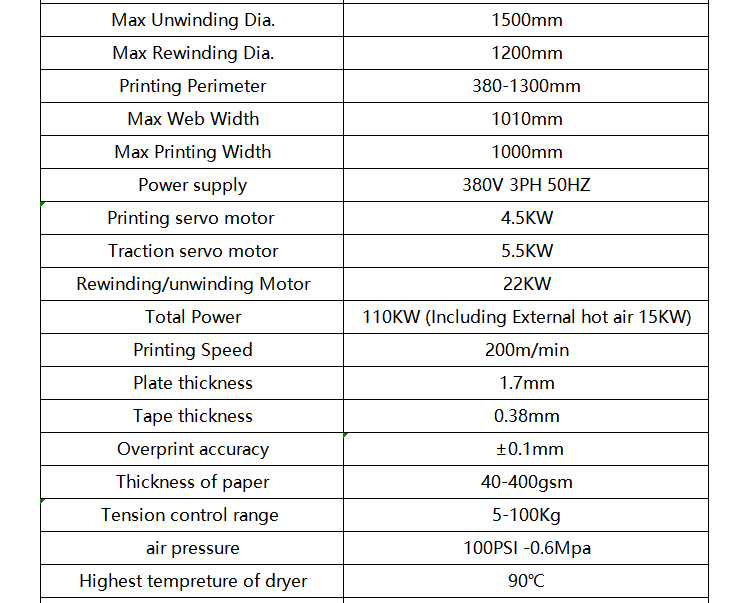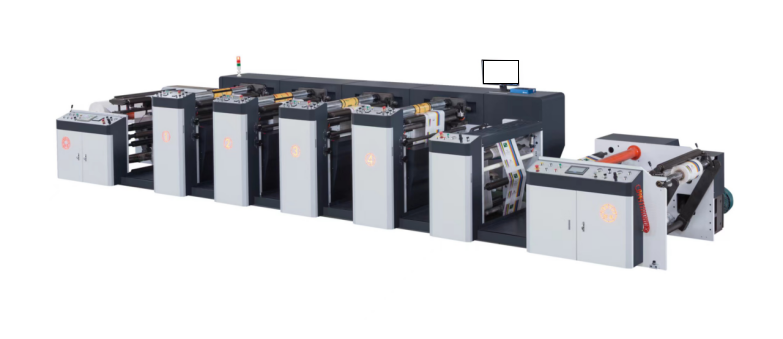
Number of Colors: A 6-color flexo printing machine refers to a printing press equipped with six printing stations, each capable of applying a different color of ink. This allows for full-color printing, as well as the ability to add spot colors or special effects.
Flexographic Printing Technology: Flexographic printing is a type of relief printing process where flexible rubber or polymer printing plates are used to transfer ink onto the substrate. It is well-suited for printing on a wide range of flexible materials, including paper, plastic films, and foils.
Modular Design: Flexo printing machines are typically modular in design, allowing for easy customization and configuration to meet specific printing requirements. Each printing station can be equipped with different printing units, such as inking systems, drying systems, and finishing equipment.
High-Speed Printing: Flexographic printing machines are known for their high-speed capabilities, making them ideal for large-volume printing jobs. They can achieve printing speeds of up to several hundred meters per minute, depending on the complexity of the job and the substrate being printed.
Variable Printing Options: Flexo printing machines offer flexibility in terms of printing options, including variable data printing, inline lamination, coating, and die-cutting. This versatility allows for the production of a wide range of packaging and label products with varying designs and specifications.
Precise Color Registration: Advanced flexo printing machines are equipped with precise registration systems that ensure accurate alignment of each color on the substrate. This ensures crisp and vibrant prints with minimal color deviation.
Environmentally Friendly: Flexographic printing is considered to be an environmentally friendly printing process, as it typically uses water-based or UV-curable inks, which have lower VOC emissions compared to solvent-based inks. Additionally, flexo printing plates are often made from photopolymer materials that are recyclable.