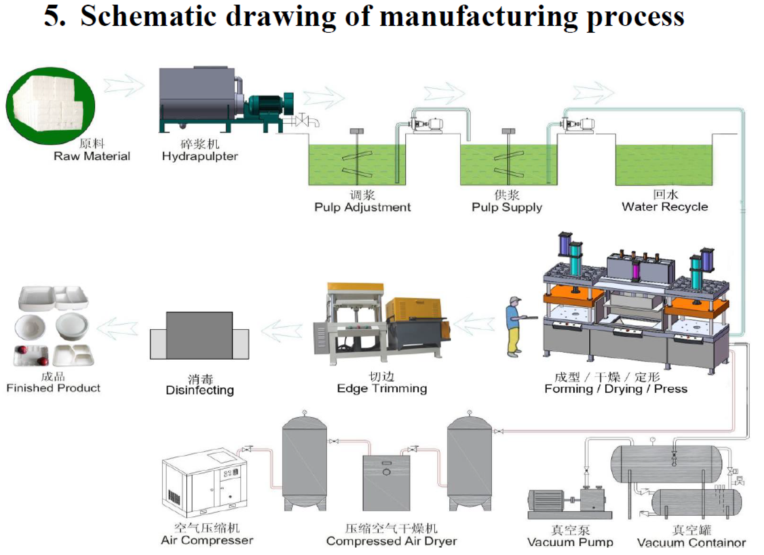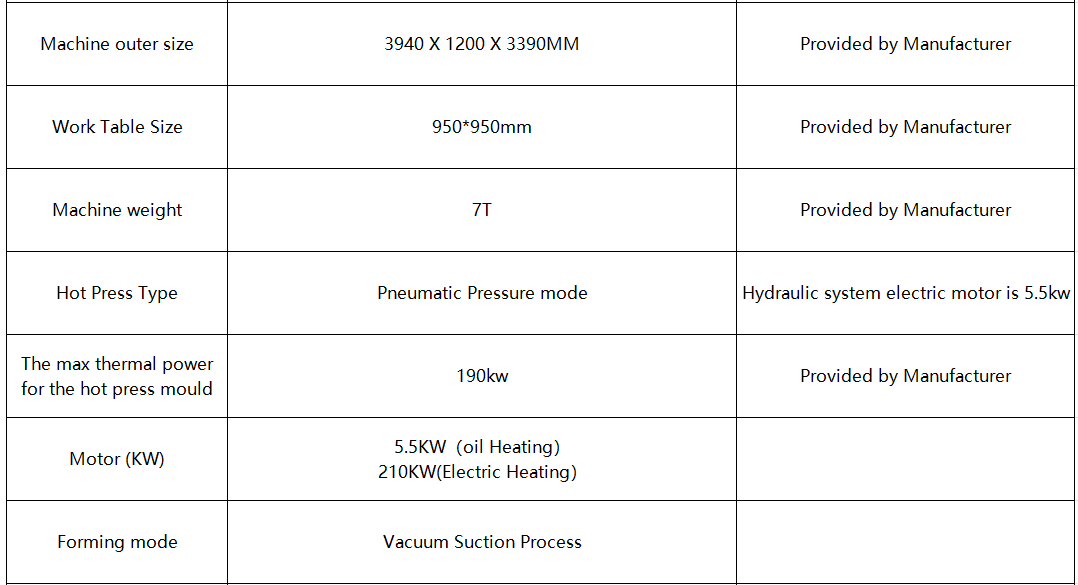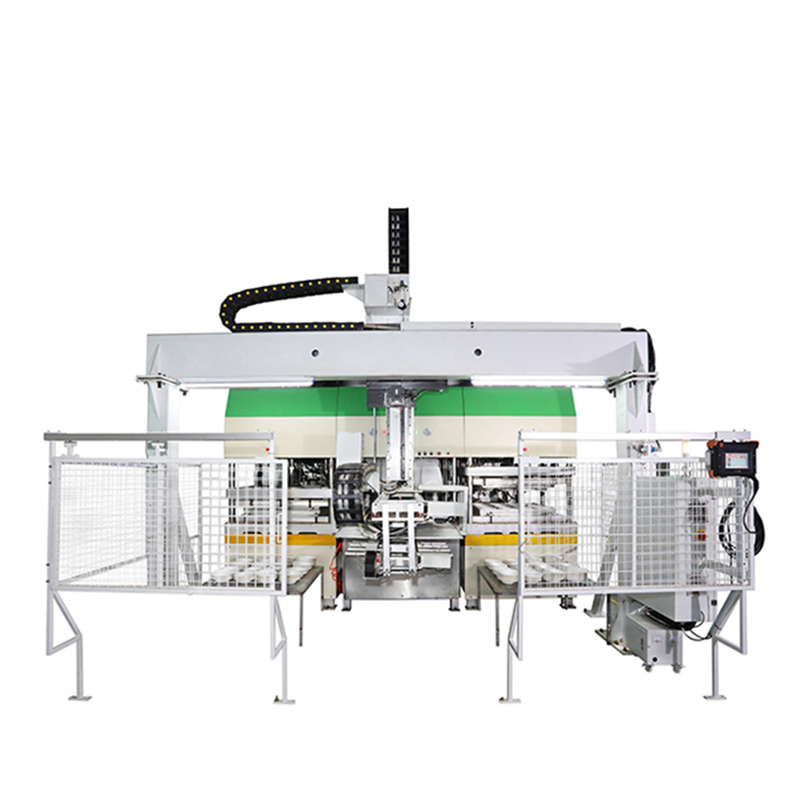
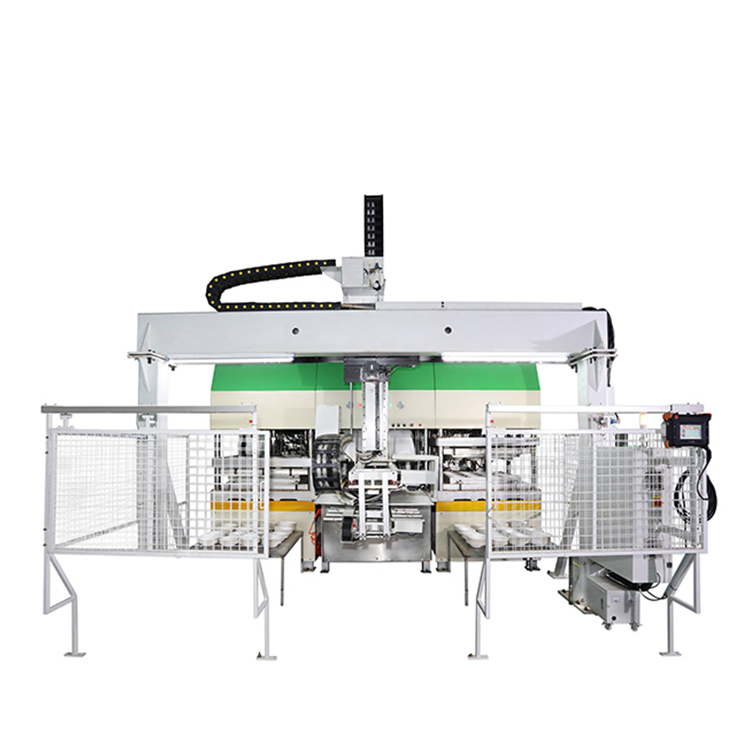
Automation: While semi-automatic pulp molding machines streamline the forming and drying processes, integrating a robotic arm automates additional tasks such as mold handling, product transfer, and stacking. This reduces the need for manual labor and increases production efficiency.
Precision and Consistency: Robotic arms are equipped with advanced sensors and control systems that enable precise and consistent handling of molded products. They can accurately position products for trimming, finishing, or packaging, ensuring uniformity in quality and appearance.
Increased Throughput: By automating material handling tasks, a robotic arm can significantly increase throughput rates of the production line. It can swiftly transfer products between different stations, minimizing idle time and maximizing machine utilization.
Flexibility: Robotic arms are programmable and versatile, capable of performing various tasks with different molds and product configurations. They can easily adapt to changes in production requirements, allowing for quick setup and reconfiguration for different product designs.
Safety: Integrating a robotic arm reduces the need for manual handling of heavy or hot molds and products, improving workplace safety and reducing the risk of injuries for operators.
Integration with Other Systems: Robotic arms can be integrated with other machinery and systems in the production line, such as conveyors, trimming machines, and packaging equipment. This seamless integration streamlines workflow and facilitates a fully automated production process.
Data Collection and Analysis: Many robotic systems are equipped with data collection capabilities, providing valuable insights into production metrics such as cycle times, uptime, and defect rates. This data can be used for performance optimization and process improvement initiatives.
Scalability: As production demands increase, robotic arms can easily scale to accommodate higher volumes without significant additional investment in manpower or equipment.
Integrating a robotic arm with a semi-automatic pulp molding machine enhances automation, precision, throughput, flexibility, and safety in the production process. It represents a strategic investment for manufacturers looking to improve productivity, reduce costs, and maintain competitiveness in the market.